A REALIST MODEL FOR COLLECTIVE LEADERSHIP
The Anatomy of Leadership in Practice
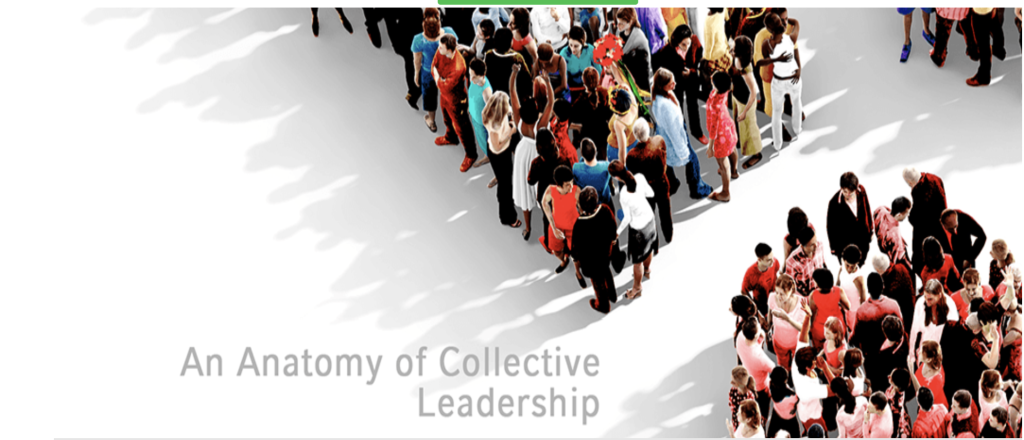
Leadership is often discussed in abstract terms — styles, competencies, frameworks, and traits. In our earlier work on the anatomy of collective leadership, we explored leadership as a relational and ethical endeavour, grounded in purpose, values, and shared responsibility rather than authority or position. That work emphasised the importance of selfless leadership: leadership that is conscious of its impact, attentive to context, and committed to the collective good.
This page builds directly on that foundation — but takes the next step. Rather than asking what leadership should be, it asks how leadership actually works in practice, particularly in complex, uncertain, and pressured environments. Using the metaphor of the human body, this anatomy explores leadership as a living system — one that thinks, feels, acts, carries responsibility, seeks balance, sustains momentum, and remains grounded in reality.
At the centre of this anatomy are three primary organs — Head, Heart, and Hands — supported by the rest of the body. Together, they illustrate how effective leadership depends not on any single capability, but on integration: sound judgement informed by values, enacted through proportionate and purposeful action. The sections below are not a checklist or a hierarchy. They are intended as prompts for reflection, dialogue, and learning — to help leaders notice which parts of the system they are relying on, and which may be underdeveloped or neglected.
For readers who would like to explore the theoretical foundations of this approach in more depth — including the ethical, relational, and collective dimensions of leadership — the original Selfless Leader page provides a complementary perspective and further reflection:
👉 Exploring the Anatomy of Collective Leadership
Optional: Watch this e-learning activity.
Understanding before action
Understanding before action means resisting the pressure to move quickly toward solutions and instead taking the time to make sense of what is really happening. In complex leadership situations, the first answer is rarely the right one. The Head enables leaders to pause, step back, and ask better questions: What kind of challenge is this? What assumptions are we making? Who sees this differently, and why? This is not analysis for its own sake, nor delay disguised as caution. It is disciplined sense-making — drawing together evidence, experience, multiple perspectives, and context to exercise sound judgement. Leaders who act without understanding often confuse activity with progress; leaders who understand before they act create decisions that are proportionate, credible, and more likely to endure. In Leadership3, the Head ensures that action is informed by insight rather than impulse, and that leadership responds to reality as it is, not as we wish it to be.

The Head represents how leaders interpret reality.
Without the Head, leadership becomes impulsive or naïve.. With too much Head, leadership becomes detached, technocratic, and over-intellectualised. The leadership question of the Head becomes: What is really going on here?
<
Good collective leaders will:
When Heart Lacks Direction
The Heart grounds leadership in purpose, values, empathy, and care — without it, leadership becomes hollow and instrumental. Yet when leadership is driven by Heart alone, without sufficient judgement or direction, it can drift into sentiment without impact. Leaders may prioritise harmony over honesty, inclusion over clarity, or compassion over consequence. Difficult decisions are postponed in the name of care; boundaries blur; energy is expended without progress. This is not a failure of values, but of alignment. In Leadership3, the Heart must be guided by the Head and expressed through the Hands. Purpose gives leadership legitimacy, but direction gives it traction. When care is paired with judgement and enacted through proportionate action, leadership remains humane — and effective.
Without the Heart, leadership becomes instrumental and hollow.
With too much Heart, leadership risks sentiment without direction. Why leadership matters, and whether it can be sustained. The Heart is the moral and emotional core of leadership.
This is where good collective leaders:
Turning intent into impact
The Hands represent how leadership is enacted and are where leadership becomes real. Purpose, values, and understanding only matter if they are translated into action that others can see, feel, and engage with. Turning intent into impact means choosing how leadership is exercised — when to decide, when to delegate, when to convene, and when to step back. It requires proportion: acting neither too quickly nor too slowly, neither too forcefully nor too lightly. When leadership relies on Hands alone, action becomes performative — busy but disconnected, decisive but misaligned. When the Hands are absent, leadership remains aspirational but ineffective. In Leadership3, the Hands ensure that insight and care are expressed through practice, enabling others to contribute rather than comply, and ensuring that leadership leaves a trace in outcomes, not just intentions.
Without the Hands, leadership remains theoretical. With only Hands, leadership becomes reactive or coercive. It is all about balance.
Leadership question of the Hands:
How should leadership be exercised — here and now?
This is where good collective leaders:
The Shoulders represent where leadership carries weight. They symbolise responsibility, accountability, and the willingness to hold difficult decisions rather than deflect them. Leadership inevitably involves pressure — competing demands, moral tension, and moments where there are no popular choices. Strong Shoulders allow leaders to absorb this weight without passing it unnecessarily onto others, while still sharing responsibility appropriately. In Leadership3, the Shoulders remind us that leadership is not about comfort, but about standing steady when it would be easier to step aside.
Without the Shoulders, leadership avoids responsibility. With only the Shoulders, leadership becomes heavy-handed or burdensome. Again, it is all about balance.
Leadership question of the Shoulders:
What responsibility must I hold — and what can I legitimately share?
This is where good collective leaders:
We have said much about the need for balance. The Hips are the centre of balance in the leadership anatomy. They connect thinking, feeling, and doing — enabling leadership to move without losing stability. When leadership lacks alignment, effort becomes fragmented and energy leaks away. The Hips represent coherence: between values and actions, intention and impact, direction and delivery. In Leadership3, strong Hips allow leaders to pivot, adapt, and respond to change while remaining grounded in purpose..
Without the Hips, leadership lacks stability and coherence. With only the Hips, leadership risks rigidity and over-caution. It is the epitomy of balance.
Leadership question of the Hips:
Are my actions aligned with what I say matters most?
This is where good collective leaders:
The Legs represent leadership’s capacity to move forward over time. They provide momentum, stamina, and persistence — especially when change is slow or resistance emerges. Leadership is rarely a sprint; it is sustained effort under imperfect conditions. Strong Legs allow leaders to keep going when enthusiasm fades, setbacks occur, or progress feels incremental. In Leadership3, the Legs ensure that leadership is not just inspirational at the start, but credible at the finish.
Without the Legs, leadership stalls after the vision is set. With only the Legs, leadership becomes relentless and exhausting.Once more – and no apologies for repeatition – it is all about balance.
Leadership question of the Legs:
How do we sustain progress without burning people out?
This is where good collective leaders:
The Feet keep leadership connected to the ground. They represent lived experience, context, and the everyday reality in which leadership is exercised. The Feet remind leaders that decisions land somewhere — in communities, teams, and systems that feel their impact. Leadership that loses contact with the ground becomes abstract, disconnected, and ultimately illegitimate. In Leadership3, the Feet ensure leadership stays rooted in what is actually happening, not just what is intended..
Without the Feet, leadership becomes detached and theoretical. With only the Feet, leadership risks short-termism and localism.For the final time – yes, you’ve guessed it! It is all about balance!
Leadership question of the Feet:
Where is leadership actually being felt — and by whom?.
This is where good collective leaders: